Vietnamese Mother-of-Pearl
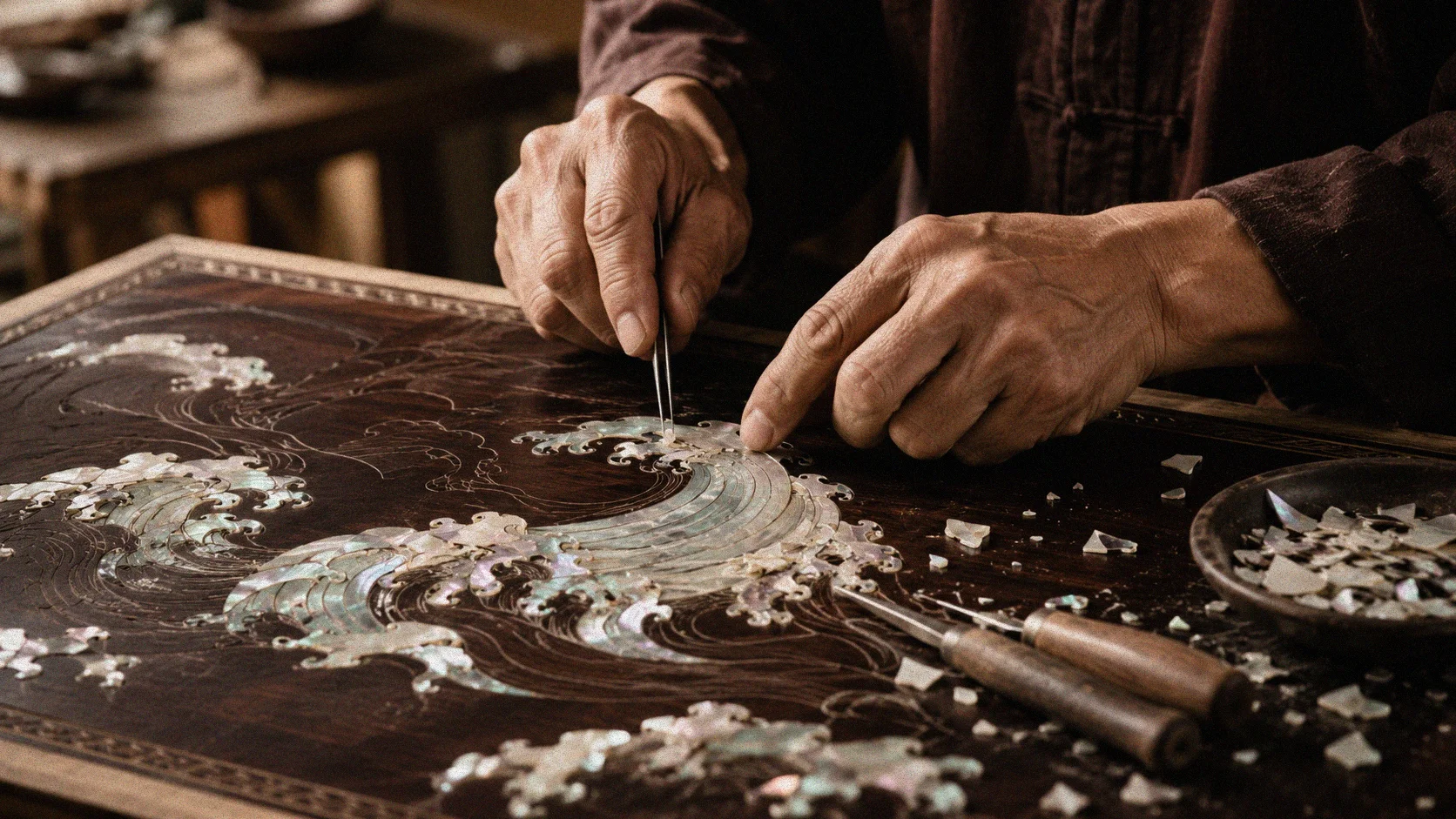
A mother-of-pearl inlay painting begins with fragments of shell — small pieces of the sea carrying colors that never remain entirely still. Cut, shaped, and set into a surface by hand, each fragment catches light differently. Blue turns to green, silver shifts into violet, and an image begins to change as the viewer moves. In this craft, the image is not simply painted. It is assembled from light.
MATERIAL
Light Held Within the Shell
A natural material shaped by the hand and brought to life by light.
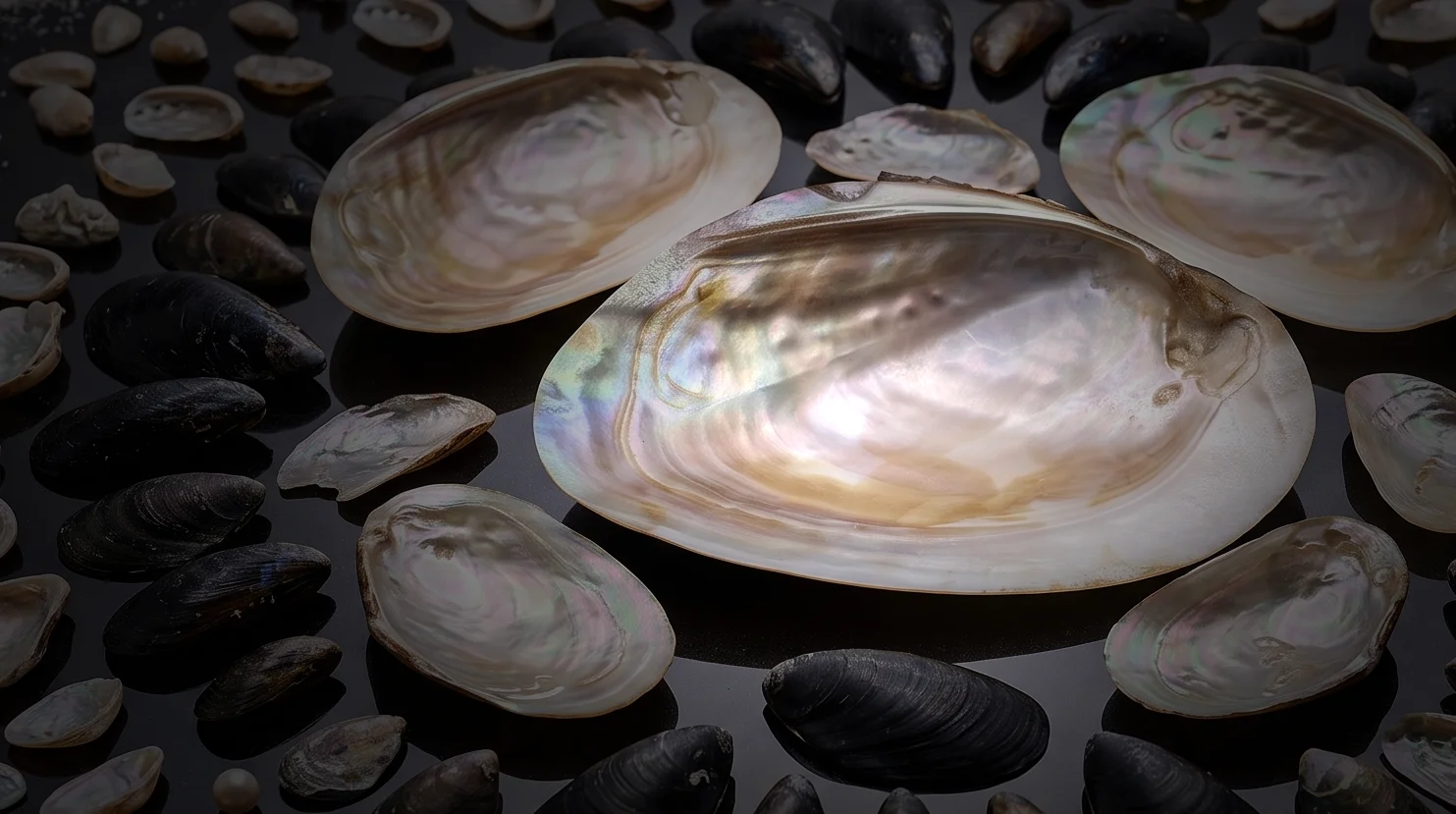
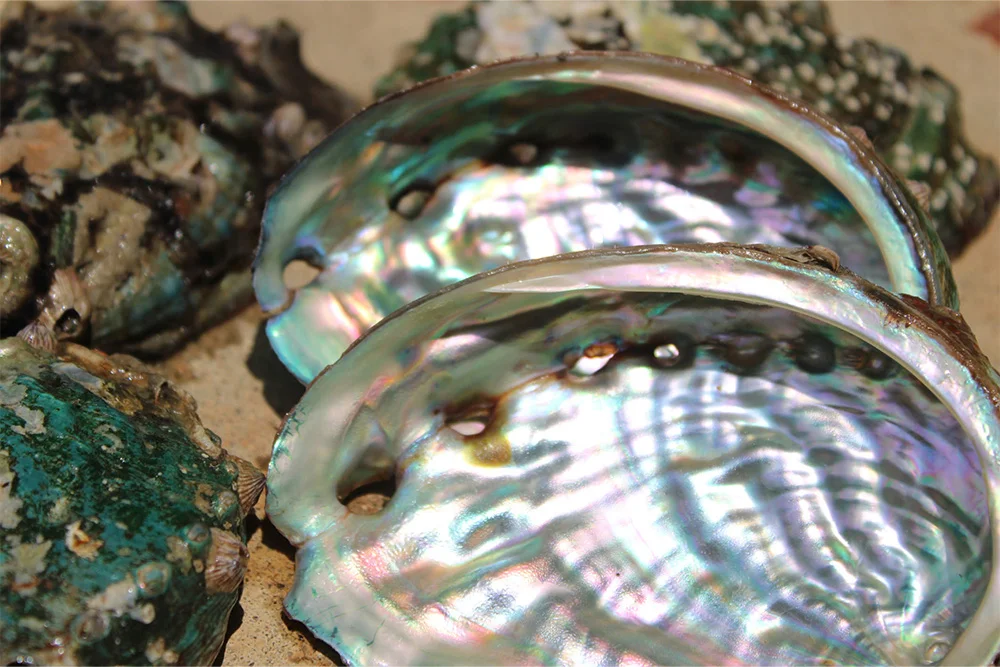
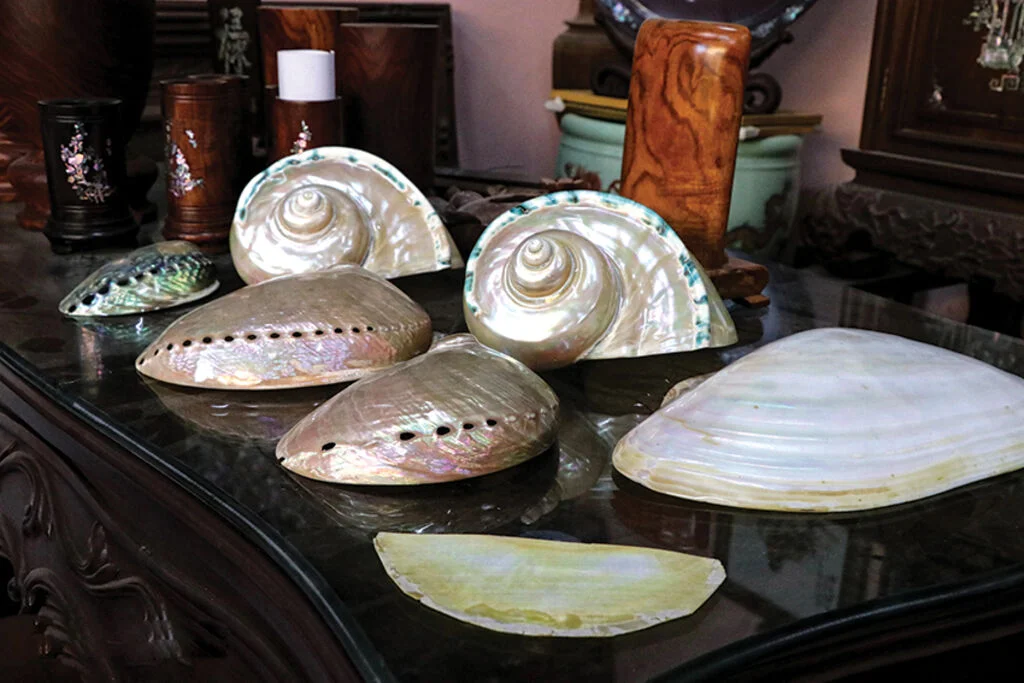
Mother-of-pearl comes from the inner layers of shells, where natural iridescence creates shifting tones of silver, blue, green, and violet.
Vietnamese artisans select each fragment for its color, grain, and reflection. Once assembled, shell becomes more than decoration — it becomes line, texture, color, and light.
ORIGIN
From the Sea to the Surface
Before becoming an image, every fragment carries the memory of something once formed beneath the water.
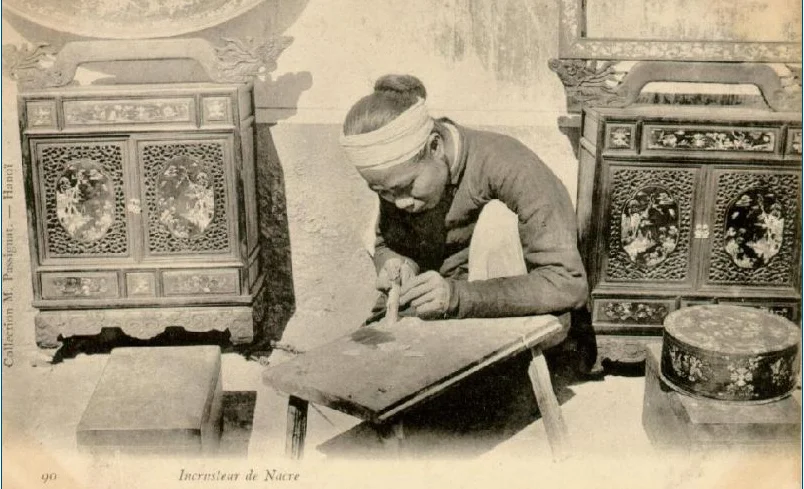
Vietnam’s long coastline provided generations of craftsmen with shells whose luminous inner layers could be cut and transformed into decorative material. Mother-of-pearl inlay gradually became an established craft, appearing on wooden objects, furniture, architectural elements, ritual pieces, and later, pictorial panels.
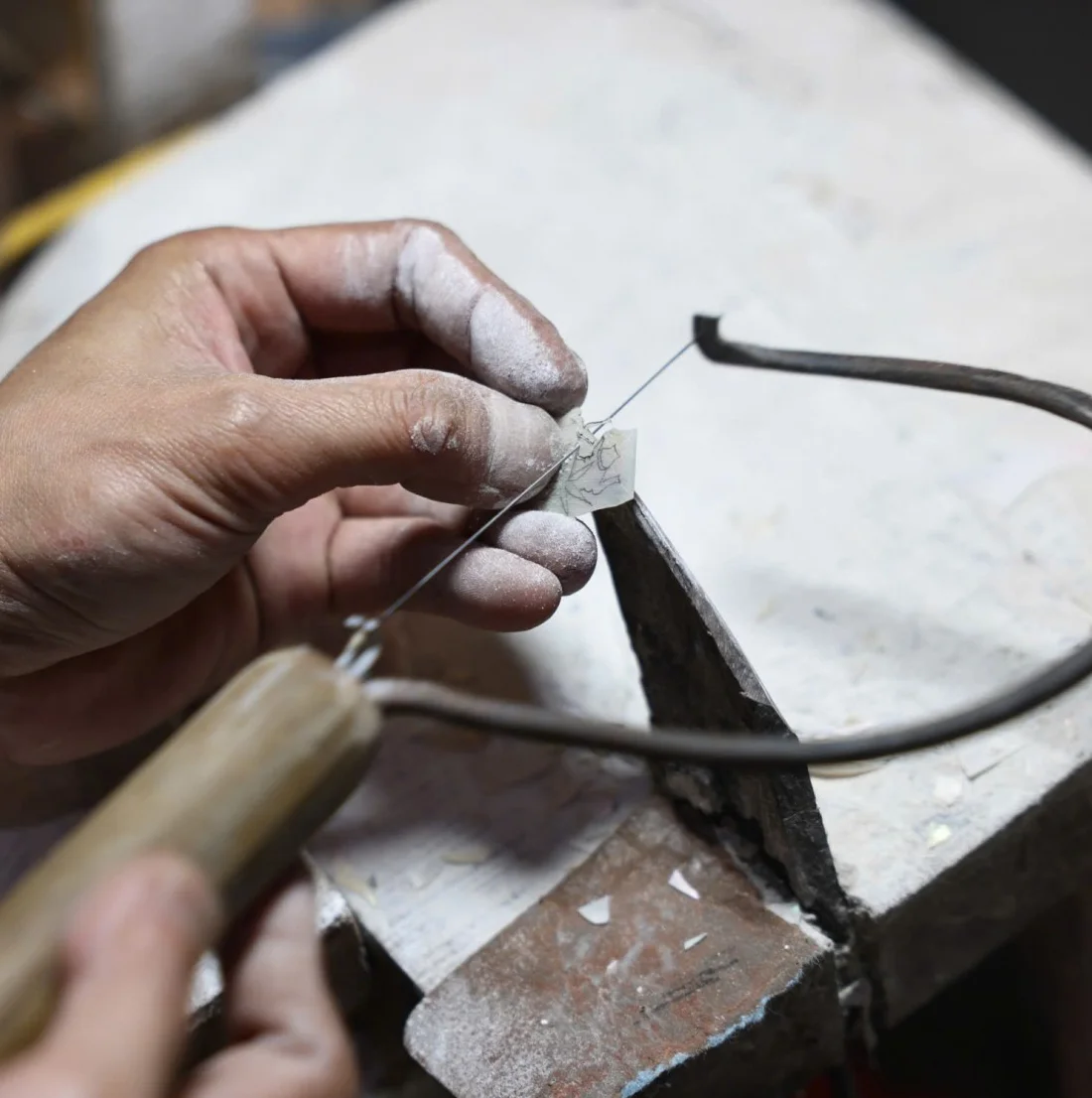
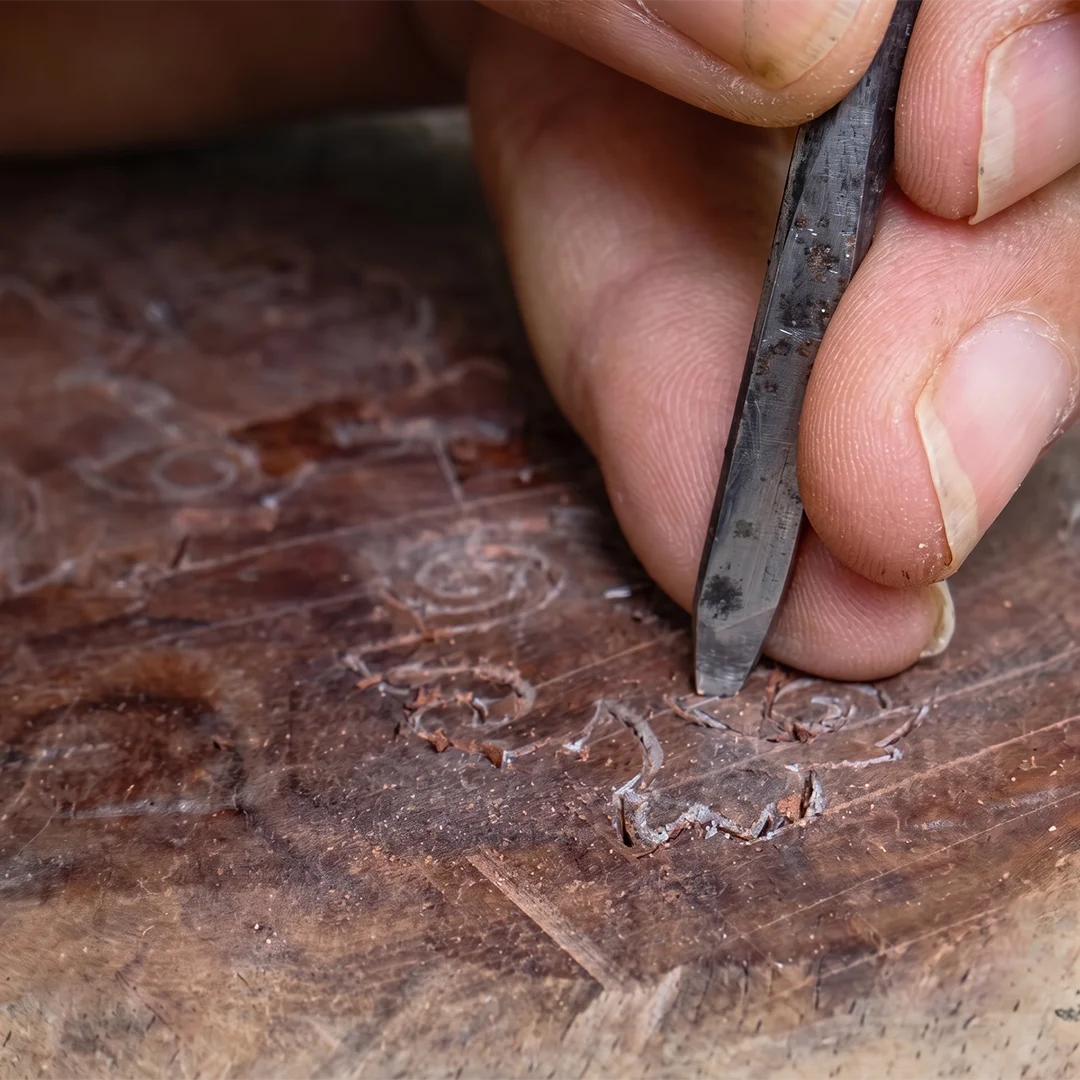
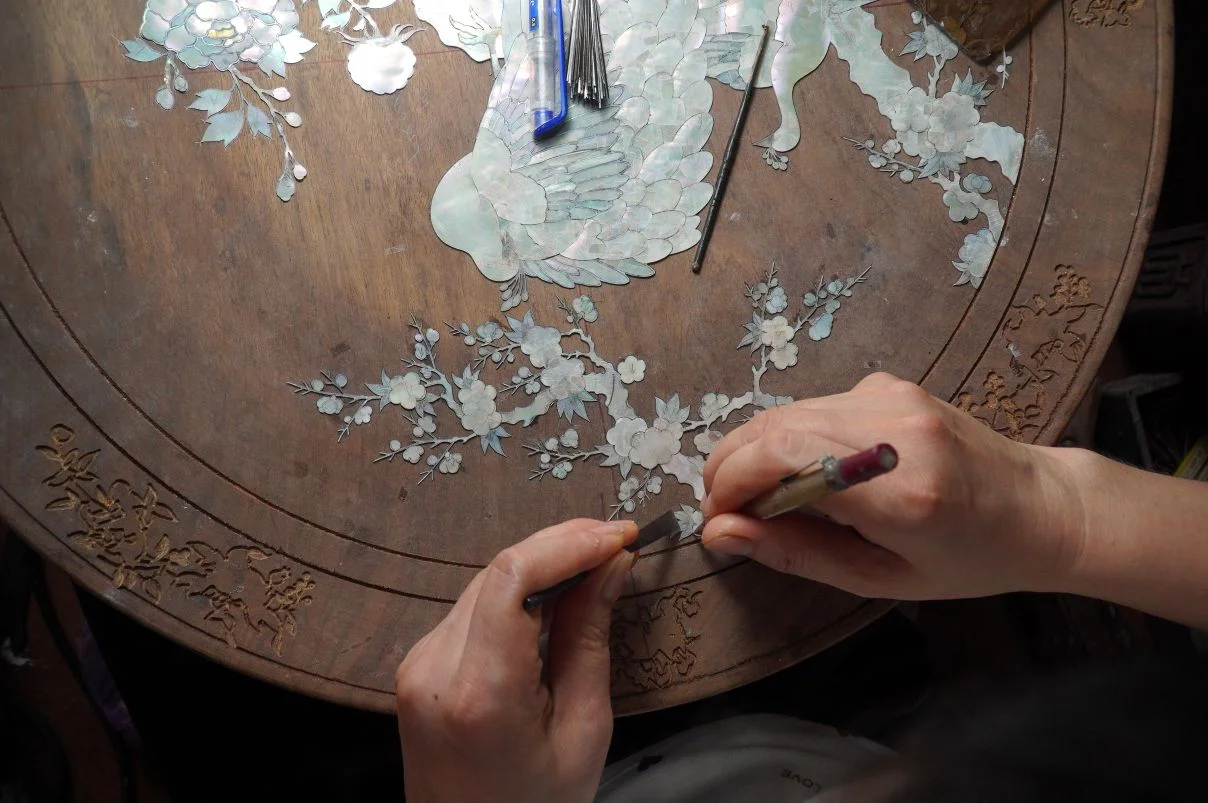
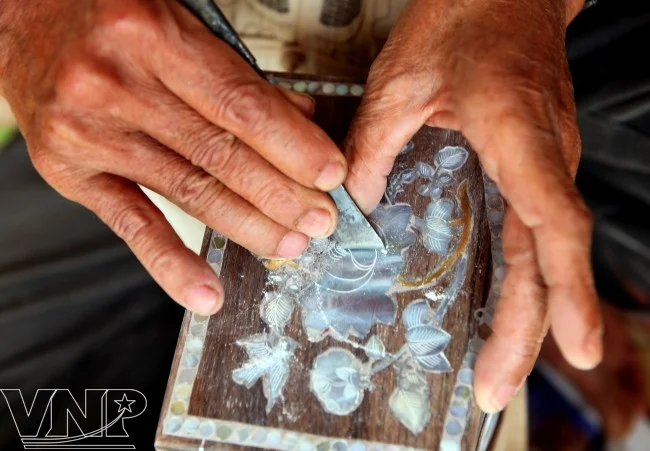
Among the places most closely associated with the tradition is Chuôn Ngọ, part of Chuyên Mỹ near Hanoi. Local tradition traces the craft there back to the Lý dynasty and associates its transmission with Trương Công Thành. Over generations, the skills of cutting, carving, fitting, and polishing shell were passed from one pair of hands to another.
What began with a fragment taken from the sea became part of a visual language rooted deeply in Vietnamese craftsmanship.
HERITAGE
A Craft Passed from Hand to Hand
What survives is not only the object, but the knowledge behind it.
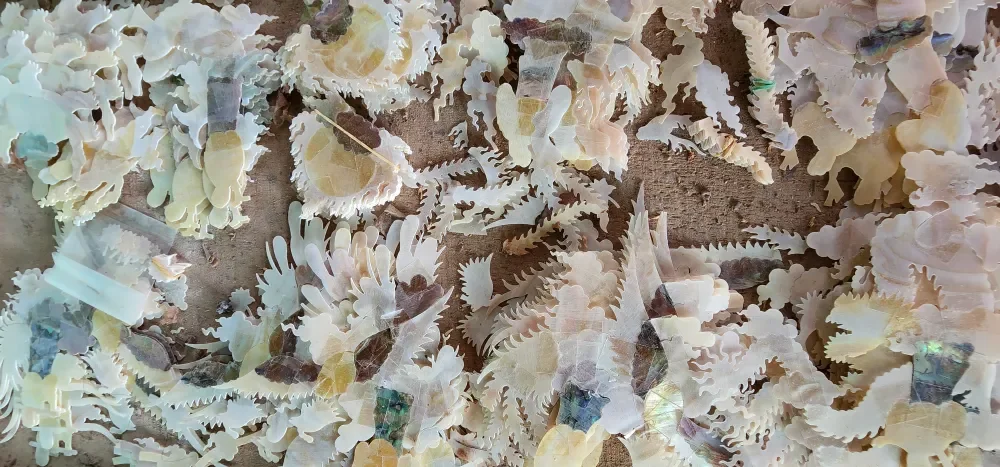
For generations, artisans in villages such as Chuyên Mỹ and Chuôn Ngọ have passed down the craft through practice and observation.
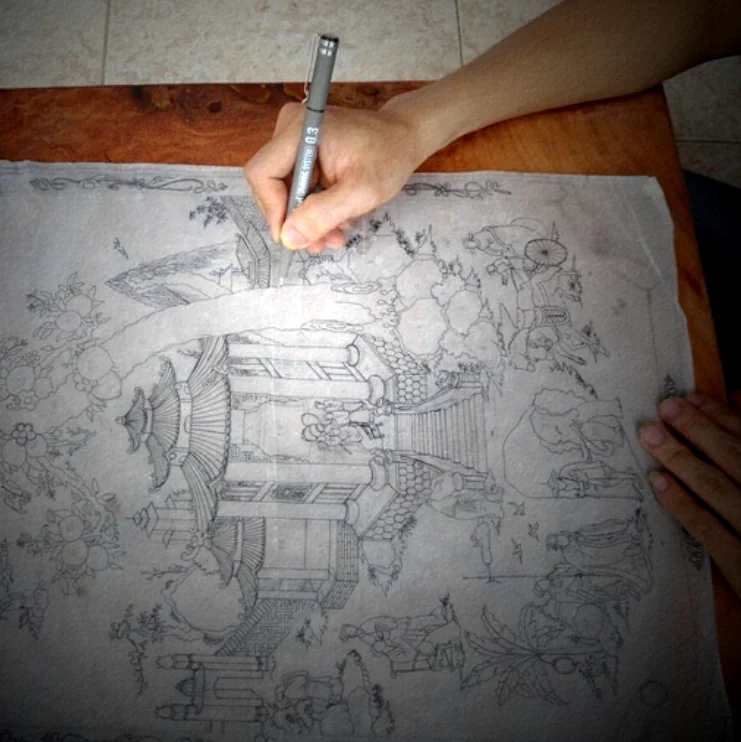
The knowledge lies in subtle decisions: how to cut a curve, how to place a fragment, how to choose the piece whose light falls in exactly the right direction.
The craft continues from one pair of hands to another.
LIGHT
An Image That Changes as You Move
Mother-of-pearl never holds only one color.
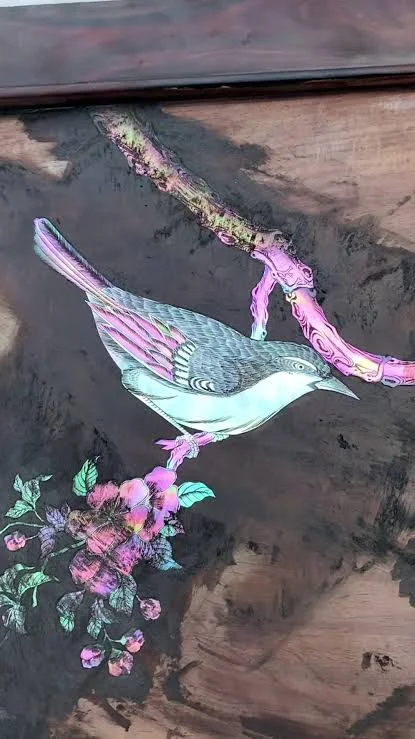
Its surface shifts with light and movement. Silver becomes blue. Green appears, then disappears. A detail may reveal itself only from a certain angle.
This changing reflection gives the work a depth that cannot be seen from one fixed viewpoint.
The image remains still. The light does not.
LANGUAGE & CONTEMPORARY
Stories Written in Fragments
Small pieces of shell become landscapes, figures, flowers, and memories.
Traditional inlay often depicts landscapes, birds, plants, human figures, and scenes drawn from Vietnamese culture. From afar, the fragments become a complete image. Up close, the composition breaks apart again into individual pieces of color, texture, and light.
The whole is made from fragments, yet every fragment remains visible.
Beyond the Traditional Panel
An old craft can enter new spaces without losing its memory.
Today, mother-of-pearl inlay can move beyond traditional furniture and decorative panels into art objects, interiors, architectural surfaces, and contemporary design. Forms may change, but the essence remains in the relationship between material, craftsmanship, and light.
Tradition does not need to look old in order to stay alive.
CONTINUATION
Light Passed On
A tradition continues whenever an old material finds a new expression.
Mother-of-pearl inlay is built from fragments — of shell, of light, and of knowledge passed through generations.
From the sea to the artisan’s hand, from a small fragment to a complete image, the material continues to transform while carrying its memory forward.
Not by leaving tradition behind, but by allowing it to reflect the present in a new way.